Expanding a Food Delivery Platform into Everyday Shopping
Defining the MVP for a new local-commerce platform that expanded a food delivery business into everyday shopping.
As the Senior Product Designer, I led the end-to-end design of the MVP—from defining the product strategy and information architecture to prioritizing features and designing the end-user experience.
ROLE
Sr. Product Designer
DOMAIN
E-Commerce
DURATION
4 Months
TEAM
PM, PA, Marketing, PD, iOs & Android team
Impact
Successfully launched a new marketplace business.
Validated marketplace demand and expanded the platform beyond restaurant delivery into everyday shopping.
10 K+
Within the first
month
+9.7%
Increase in engagement compared
to the previous experience
0-1
Marketplace launch / validated
a new business model
Business Context
As customers increasingly expected to shop for everyday essentials on demand, Yemeksepeti saw an opportunity to expand beyond restaurant delivery.
The company invested in a local-store marketplace to increase shopping frequency and become part of customers’ everyday shopping habits.
Challenge
As a 0→1 marketplace, there was no existing shopping experience, no validated feature set, and no certainty about what would drive adoption.
The challenge was to define an MVP that balanced customer value, business goals, and engineering constraints by identifying the features that were essential to validate the marketplace while keeping the product lean enough to launch quickly.
Product Strategy
Discovery Research & Insights
To define the right MVP, I synthesized existing customer research, shopping behavior from previous products, and marketplace benchmarks to understand how people shop for everyday essentials and what would create the most value in the first release.
1/ Intent-driven shopping
Customers often arrived with a clear purchase intent rather than browsing for inspiration.
Instead of exploring multiple options, they wanted to find products quickly and complete their purchase with minimal effort.
77.7%
of users entered with an item-specific goal.
47.4%
had no preferred vendor and needed help finding a store
2/ Fast Discovery Drives Better Decisions
When choosing between stores, users prioritized delivery speed, price, fees, and product availability over promotional content.
They wanted to compare options quickly before committing to a store.
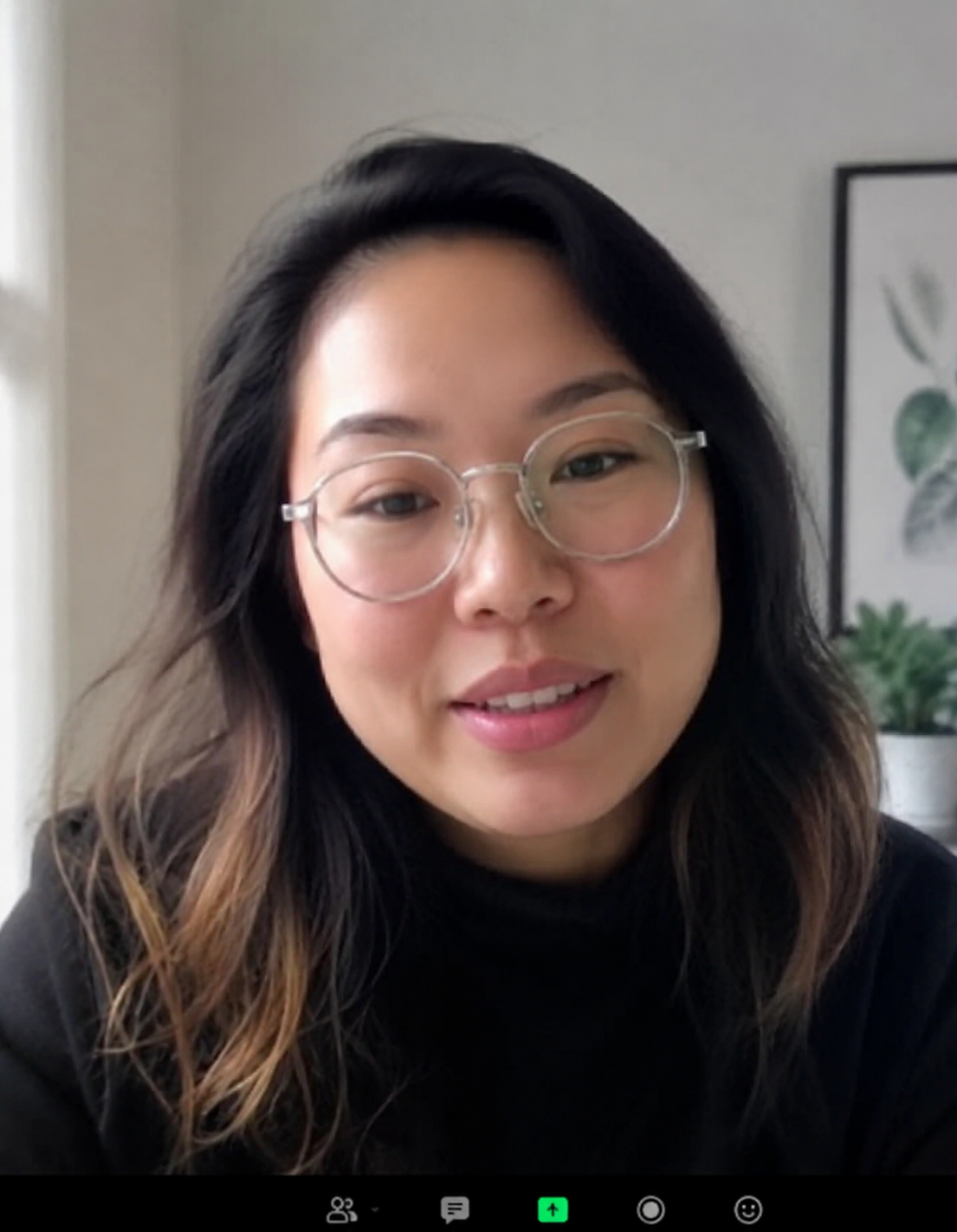
“ I’m looking for rice specifically. I know what I want to buy, but I need to know which store is the best option. Search, filters, and categories should work together to help me find it”
-P1, Zoelyn (SG, New User)
3/ Trust Reduces Uncertainty
When purchasing from unfamiliar local stores, users relied on familiarity and trust signals before placing an order.
“ I’ve never ordered from this store before. Popularity gives me another level of trust when deciding where to buy.”
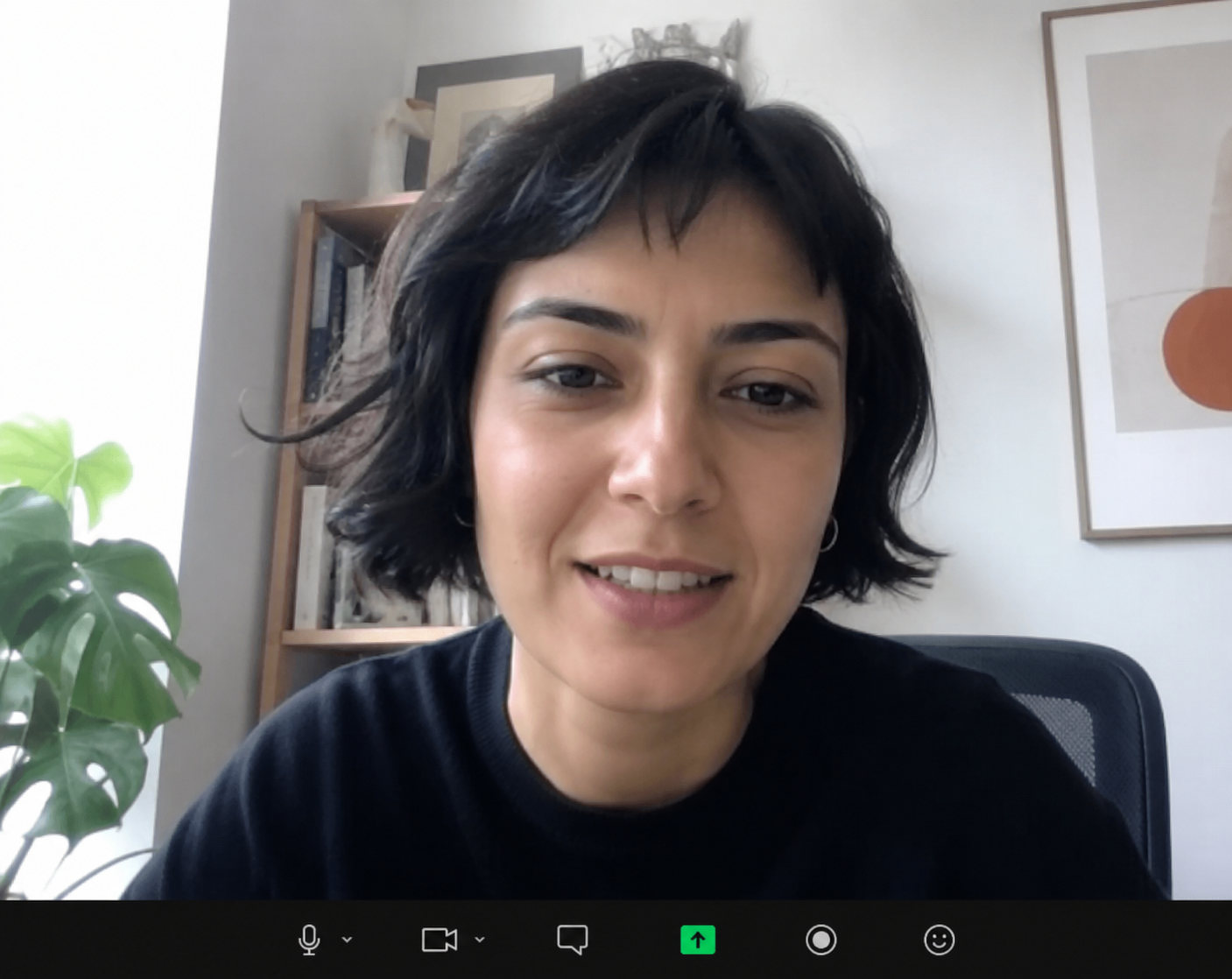
-P4, Hilal (TR, Existing User)
These insights revealed a consistent pattern: users weren’t looking to explore—they wanted to find the right products and complete their shopping as quickly as possible. This became the guiding principle behind every product and prioritization decision throughout the MVP.
Product Principle
Enable fast, confident purchase decisions by reducing the effort required to find, compare, and trust local stores.
Key Product Decision
#2 Design for Fast Discovery
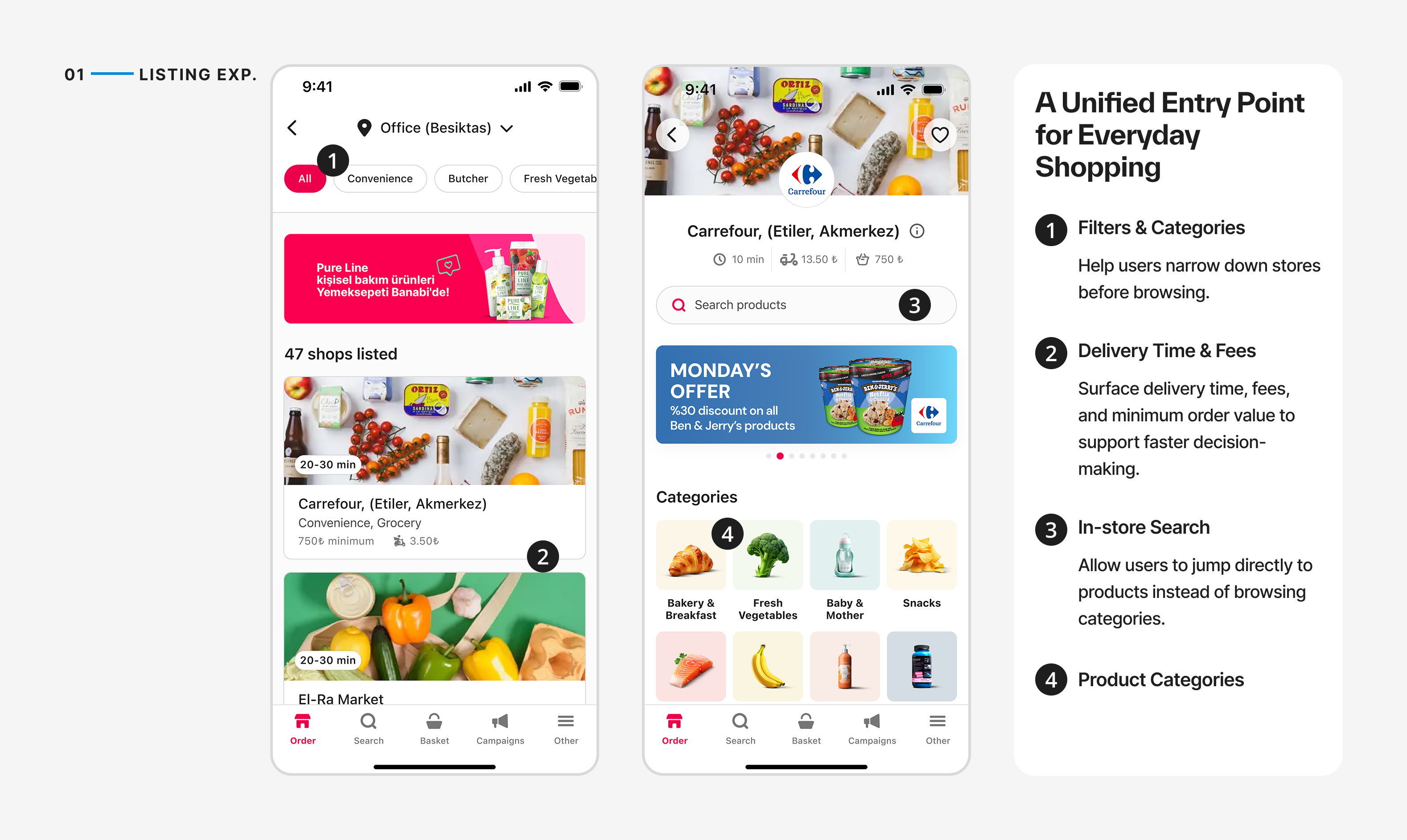
With the entry experience defined, the next challenge was helping users find the right store as quickly as possible.
Problem
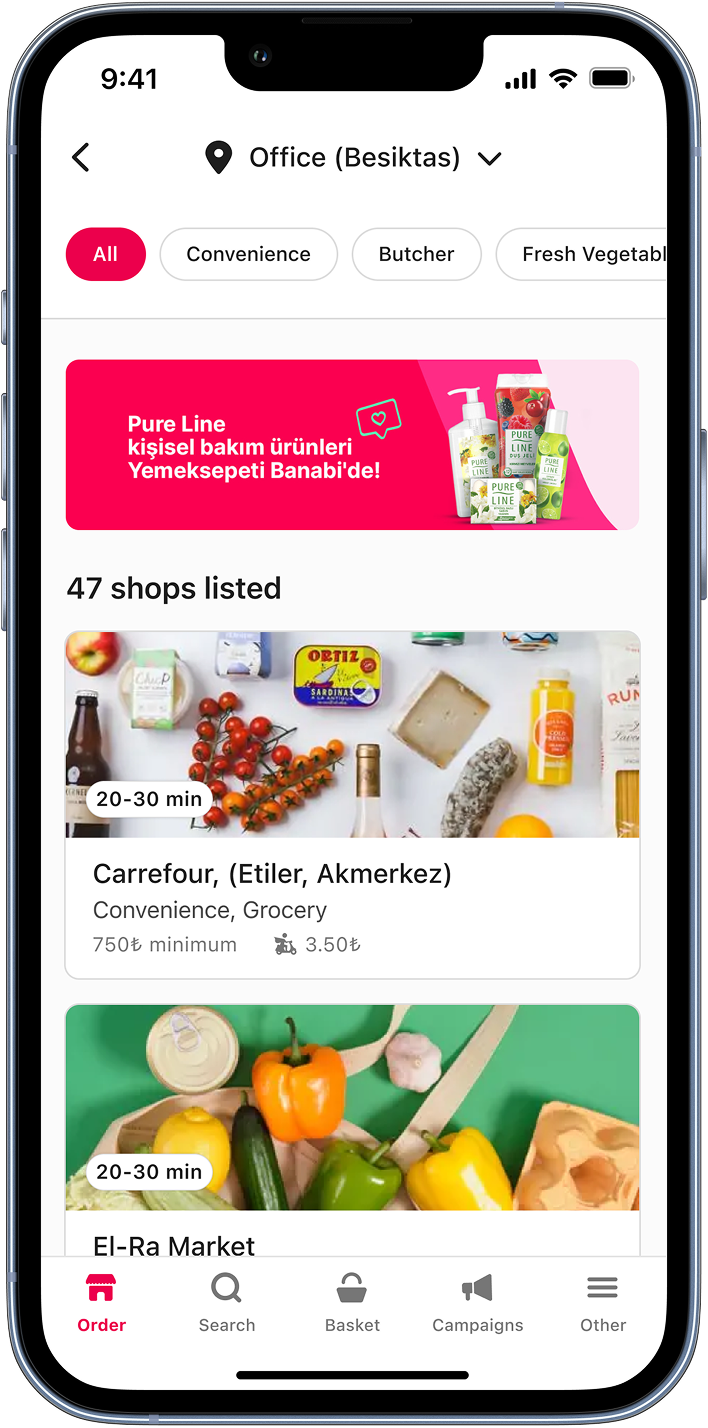
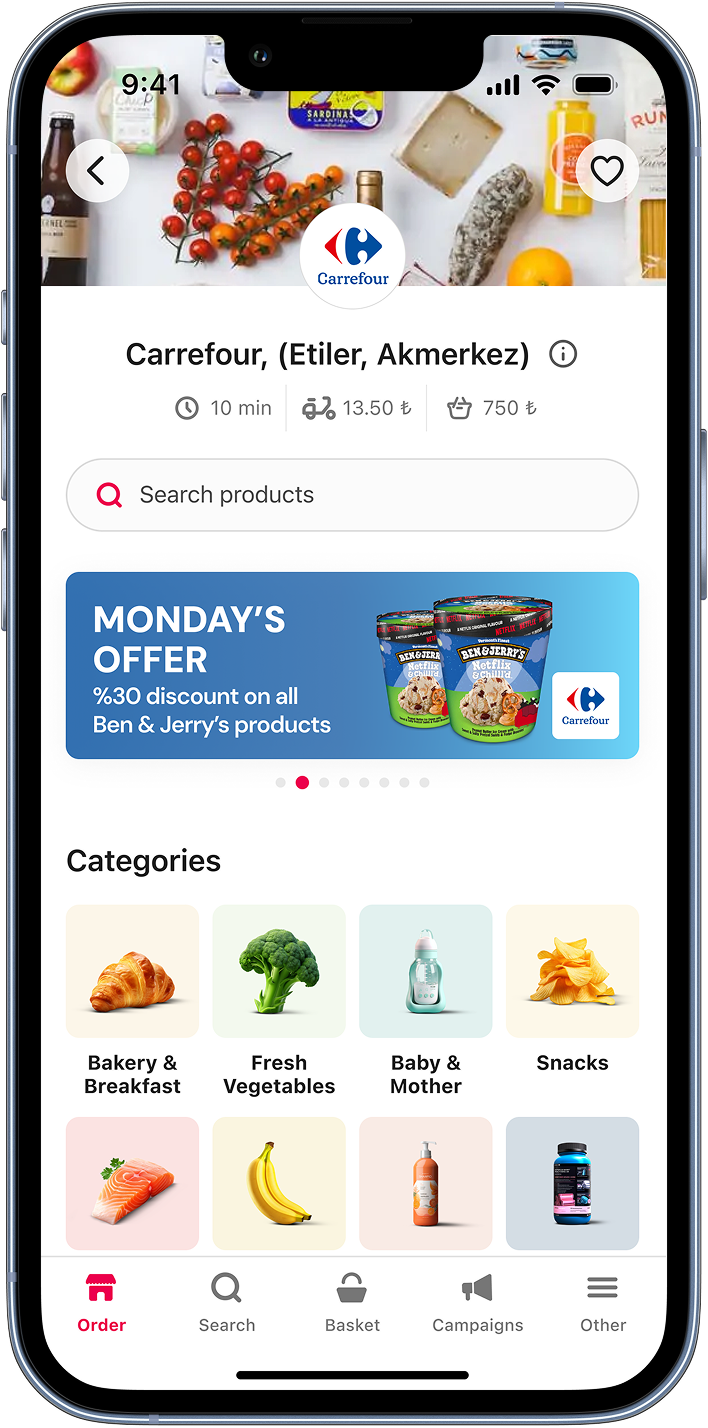
Research showed that most users arrived with a clear purchase intent, but many didn’t know which store had the products they needed. Finding the right store often required unnecessary browsing and comparison.
Decision
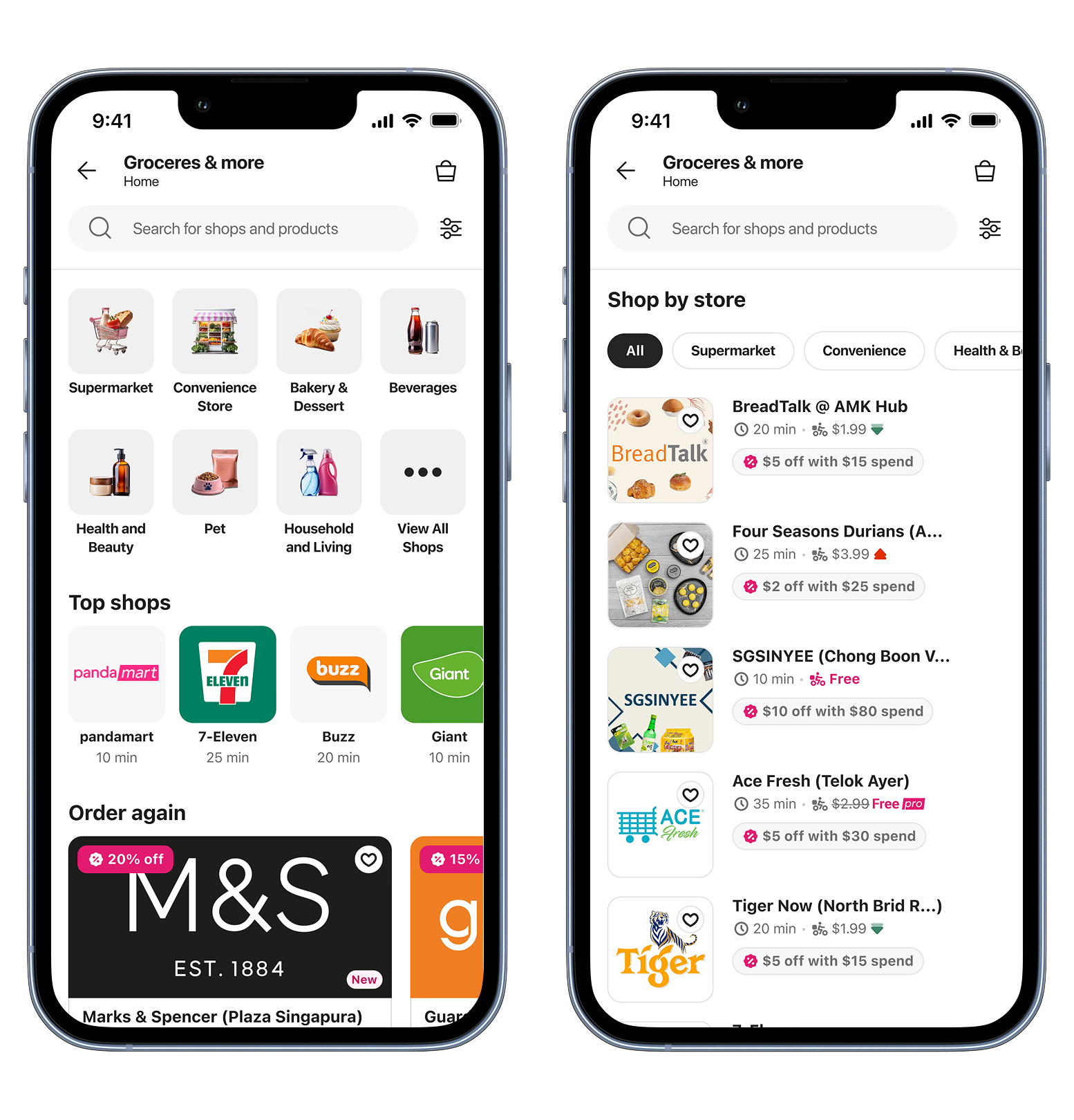
I optimized both the listing and store experience for fast product discovery. Search, categories, filters, and in-store search helped users reach products faster, while delivery time, fees, and ratings enabled faster store comparison and more confident decisions.
#1 Designing a Unified Entry Experience
Problem
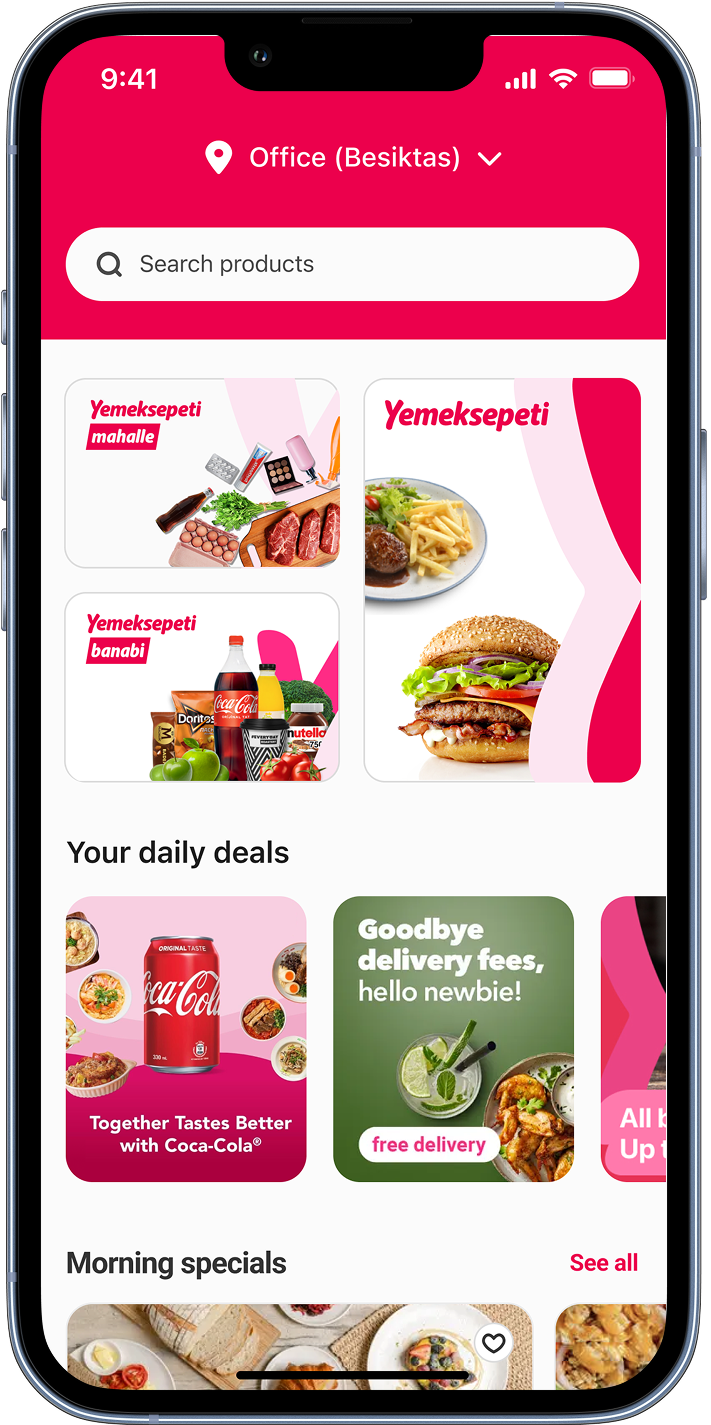
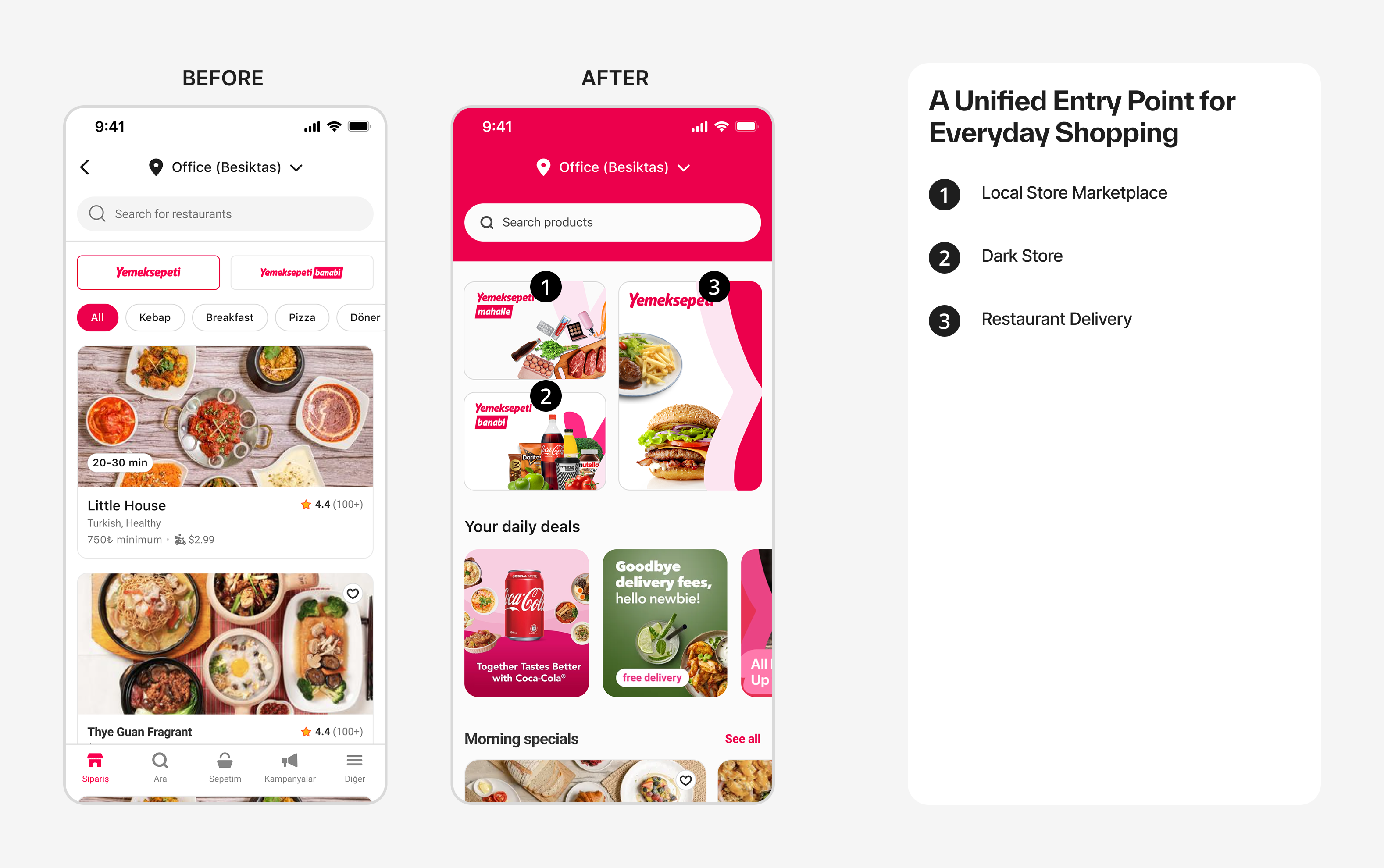
The existing homepage was built for restaurant ordering and no longer reflected the platform’s expanding ecosystem. Users looking for groceries or local stores had to take extra steps before reaching the service they intended to use.
Decision
I redesigned the homepage around dedicated entry points for Local Stores, Dark Store, and Restaurant Delivery, allowing users to access each service directly from a single, unified home experience.
#3 Balancing Customer Value and Feasibility
Problem
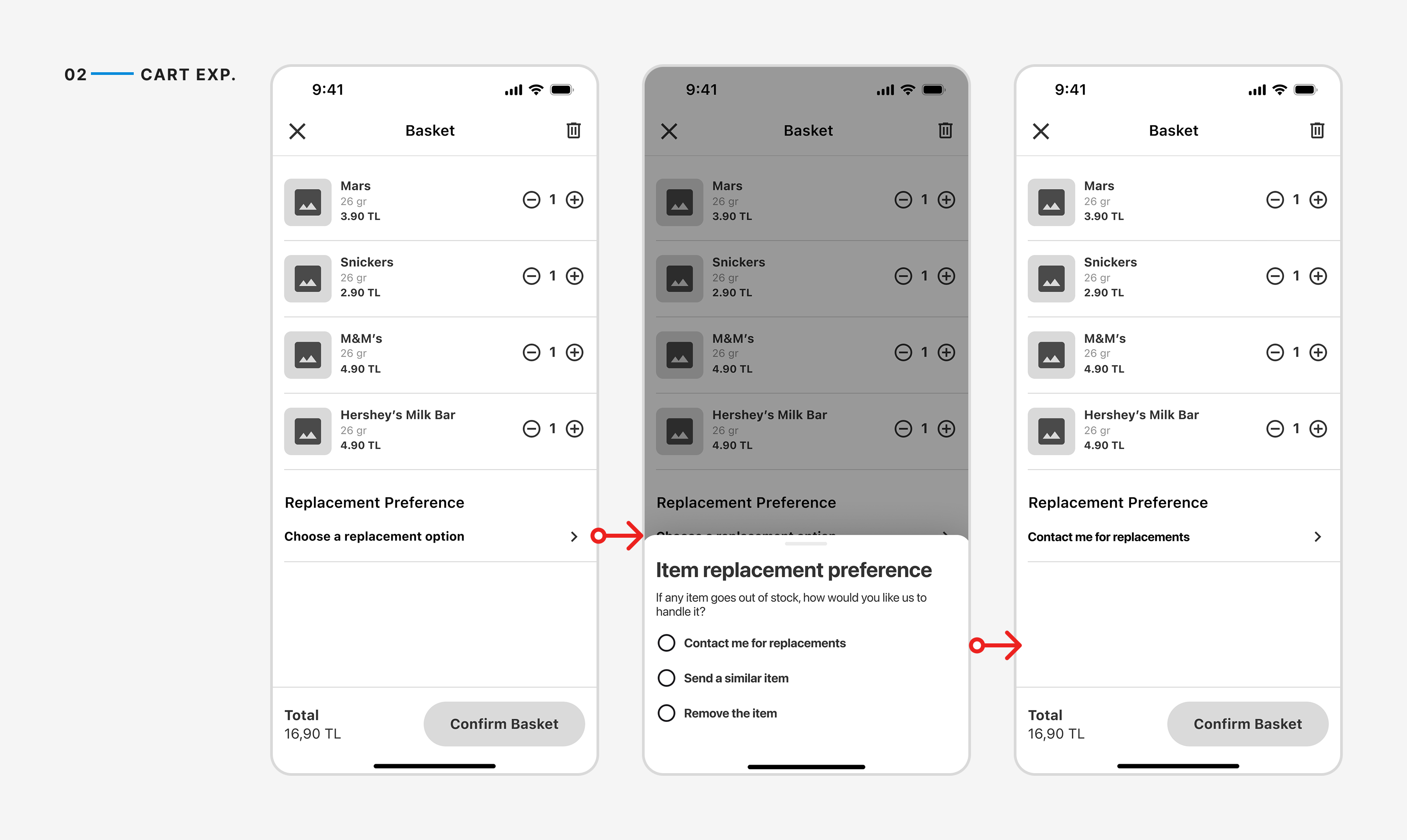
Customers expected an alternative when products became unavailable, but reliable inventory data wasn’t available across local merchants.
Decision
I explored multiple replacement flows, but postponed the feature after aligning with engineering and operational constraints. Instead of delaying the launch, we documented the solution for Phase 2.
Outcome
Launching the MVP allowed us to validate marketplace demand first. After launch, item replacement became one of the most requested capabilities and was later implemented.
Final Solution
A walkthrough of the final MVP, showing the complete journey from entering the marketplace to placing an order.
Key Takeaways & Next Steps
Building a 0→1 product taught me that good MVPs aren’t defined by the number of features they include, but by how effectively they validate the product vision. The hardest decisions weren’t about interaction design—they were about prioritization, trade-offs, and knowing what could wait.
Future Iterations
- Introduce item replacement to improve the experience when products become unavailable.
- Explore multi-store baskets to support shopping across multiple local stores in a single order.
- Refine the discovery experience using post-launch behavioral data and usability testing.


Expanding a Food Delivery Platform into Everyday Shopping
Defining the MVP for a new local-commerce platform that expanded a food delivery business into everyday shopping.
As the Senior Product Designer, I led the end-to-end design of the MVP—from defining the product strategy and information architecture to prioritizing features and designing the end-user experience.
ROLE
Sr. Product Designer
DOMAIN
E-Commerce
DURATION
4 Months
TEAM
PM, PA, Marketing, mobile dev. team
Impact
Successfully launched a new marketplace business.
Validated marketplace demand and expanded the platform beyond restaurant delivery into everyday shopping.
10 K+
Within the first
month
+9.7%
Increase in engagement compared to the previous experience
0-1
Marketplace launch /
validated a new business model
Business Context
As customers increasingly expected to shop for everyday essentials on demand, Yemeksepeti saw an opportunity to expand beyond restaurant delivery.
The company invested in a local-store marketplace to increase shopping frequency and become part of customers’ everyday shopping habits.
Challenge
As a 0→1 marketplace, there was no existing shopping experience, no validated feature set, and no certainty about what would drive adoption.
The challenge was to define an MVP that balanced customer value, business goals, and engineering constraints by identifying the features that were essential to validate the marketplace while keeping the product lean enough to launch quickly.
Product Strategy
Discovery Research & Insights
To define the right MVP, I synthesized existing customer research, shopping behavior from previous products, and marketplace benchmarks to understand how people shop for everyday essentials and what would create the most value in the first release.
1/ Intent-driven shopping
Customers often arrived with a clear purchase intent rather than browsing for inspiration.
Instead of exploring multiple options, they wanted to find products quickly and complete their purchase with minimal effort.
77.7%
of users entered with an item-specific goal.
47.4%
had no preferred vendor and needed help finding a store
“ I’m looking for rice specifically. I know what I want to buy, but I need to know which store is the best option. Search, filters, and categories should work together to help me find it”
-P1, Zoelyn (SG, New User)
2/ Fast Discovery Drives Better Decisions
When choosing between stores, users prioritized delivery speed, price, fees, and product availability over promotional content.
They wanted to compare options quickly before committing to a store.
3/ Trust Reduces Uncertainty
When purchasing from unfamiliar local stores, users relied on familiarity and trust signals before placing an order.
“ I’ve never ordered from this store before. Popularity gives me another level of trust when deciding where to buy.”
-P4, Hilal (TR, Existing User)
These insights revealed a consistent pattern: users weren’t looking to explore—they wanted to find the right products and complete their shopping as quickly as possible. This became the guiding principle behind every product and prioritization decision throughout the MVP.
Product Principle
Enable fast, confident purchase decisions by reducing the effort required to find, compare, and trust local stores.
Key Product Decision
#1 Designing a Unified Entry Experience
Problem
The existing homepage was built for restaurant ordering and no longer reflected the platform’s expanding ecosystem. Users looking for groceries or local stores had to take extra steps before reaching the service they intended to use.
Decision
I redesigned the homepage around dedicated entry points for Local Stores, Dark Store, and Restaurant Delivery, allowing users to access each service directly from a single, unified home experience.
#2 Design for Fast Discovery
With the entry experience defined, the next challenge was helping users find the right store as quickly as possible.
Problem
Research showed that most users arrived with a clear purchase intent, but many didn’t know which store had the products they needed. Finding the right store often required unnecessary browsing and comparison.
Decision
I optimized both the listing and store experience for fast product discovery. Search, categories, filters, and in-store search helped users reach products faster, while delivery time, fees, and ratings enabled faster store comparison and more confident decisions.
#3 Balancing Customer Value and Feasibility
Problem
Customers expected an alternative when products became unavailable, but reliable inventory data wasn’t available across local merchants.
Decision
I explored multiple replacement flows, but postponed the feature after aligning with engineering and operational constraints. Instead of delaying the launch, we documented the solution for Phase 2.
Outcome
Launching the MVP allowed us to validate marketplace demand first. After launch, item replacement became one of the most requested capabilities and was later implemented.
Final Solution
A walkthrough of the final MVP, showing the complete journey from entering the marketplace to placing an order.
Key Takeaways & Next Steps
Building a 0→1 product taught me that good MVPs aren’t defined by the number of features they include, but by how effectively they validate the product vision. The hardest decisions weren’t about interaction design—they were about prioritization, trade-offs, and knowing what could wait.
Future Iterations
- Introduce item replacement to improve the experience when products become unavailable.
- Explore multi-store baskets to support shopping across multiple local stores in a single order.
- Refine the discovery experience using post-launch behavioral data and usability testing.
Expanding a Food Delivery Platform into Everyday Shopping
Defining the MVP for a new local-commerce platform that expanded a food delivery business into everyday shopping.
As the Senior Product Designer, I led the end-to-end design of the MVP—from defining the product strategy and information architecture to prioritizing features and designing the end-user experience.
ROLE
Sr. Product Designer
DOMAIN
E-Commerce
DURATION
4 Months
TEAM
PM, PA, Marketing, mobile dev. team
Impact
Successfully launched a new marketplace business.
Validated marketplace demand and expanded the platform beyond restaurant delivery into everyday shopping.
10 K+
Within the first
month
+9.7%
Increase in engagement compared
to the previous experience
0-1
Marketplace launch / validated
a new business model
Business Context
As customers increasingly expected to shop for everyday essentials on demand, Yemeksepeti saw an opportunity to expand beyond restaurant delivery.
The company invested in a local-store marketplace to increase shopping frequency and become part of customers’ everyday shopping habits.
Challenge
As a 0→1 marketplace, there was no existing shopping experience, no validated feature set, and no certainty about what would drive adoption.
The challenge was to define an MVP that balanced customer value, business goals, and engineering constraints by identifying the features that were essential to validate the marketplace while keeping the product lean enough to launch quickly.
Product Strategy
Discovery Research & Insights
To define the right MVP, I synthesized existing customer research, shopping behavior from previous products, and marketplace benchmarks to understand how people shop for everyday essentials and what would create the most value in the first release.
1/ Intent-driven shopping
Customers often arrived with a clear purchase intent rather than browsing for inspiration.
Instead of exploring multiple options, they wanted to find products quickly and complete their purchase with minimal effort.
77.7%
of users entered with an item-specific goal.
47.4%
had no preferred vendor and needed help finding a store
“ I’m looking for rice specifically. I know what I want to buy, but I need to know which store is the best option. Search, filters, and categories should work together to help me find it”
-P1, Zoelyn (SG, New User)
2/ Fast Discovery Drives Better Decisions
When choosing between stores, users prioritized delivery speed, price, fees, and product availability over promotional content.
They wanted to compare options quickly before committing to a store.
3/ Trust Reduces Uncertainty
When purchasing from unfamiliar local stores, users relied on familiarity and trust signals before placing an order.
“ I’ve never ordered from this store before. Popularity gives me another level of trust when deciding where to buy.”
-P4, Hilal (TR, Existing User)
These insights revealed a consistent pattern: users weren’t looking to explore—they wanted to find the right products and complete their shopping as quickly as possible. This became the guiding principle behind every product and prioritization decision throughout the MVP.
Product Principle
Enable fast, confident purchase decisions by reducing the effort required to find, compare, and trust local stores.
Key Product Decision
#1 Designing a Unified Entry Experience
Problem
The existing homepage was built for restaurant ordering and no longer reflected the platform’s expanding ecosystem. Users looking for groceries or local stores had to take extra steps before reaching the service they intended to use.
Decision
I redesigned the homepage around dedicated entry points for Local Stores, Dark Store, and Restaurant Delivery, allowing users to access each service directly from a single, unified home experience.
#2 Design for Fast Discovery
With the entry experience defined, the next challenge was helping users find the right store as quickly as possible.
Problem
Research showed that most users arrived with a clear purchase intent, but many didn’t know which store had the products they needed. Finding the right store often required unnecessary browsing and comparison.
Decision
I optimized both the listing and store experience for fast product discovery. Search, categories, filters, and in-store search helped users reach products faster, while delivery time, fees, and ratings enabled faster store comparison and more confident decisions.
#3 Balancing Customer Value and Feasibility
Problem
Customers expected an alternative when products became unavailable, but reliable inventory data wasn’t available across local merchants.
Decision
I explored multiple replacement flows, but postponed the feature after aligning with engineering and operational constraints. Instead of delaying the launch, we documented the solution for Phase 2.
Outcome
Launching the MVP allowed us to validate marketplace demand first. After launch, item replacement became one of the most requested capabilities and was later implemented.
Final Solution
A walkthrough of the final MVP, showing the complete journey from entering the marketplace to placing an order.
Key Takeaways & Next Steps
Building a 0→1 product taught me that good MVPs aren’t defined by the number of features they include, but by how effectively they validate the product vision. The hardest decisions weren’t about interaction design—they were about prioritization, trade-offs, and knowing what could wait.
Future Iterations
- Introduce item replacement to improve the experience when products become unavailable.
- Explore multi-store baskets to support shopping across multiple local stores in a single order.
- Refine the discovery experience using post-launch behavioral data and usability testing.